
GeoAI-Enabled Crop Intelligence
Manual crop verification slows procurement and increases the risk of ineligible claims.
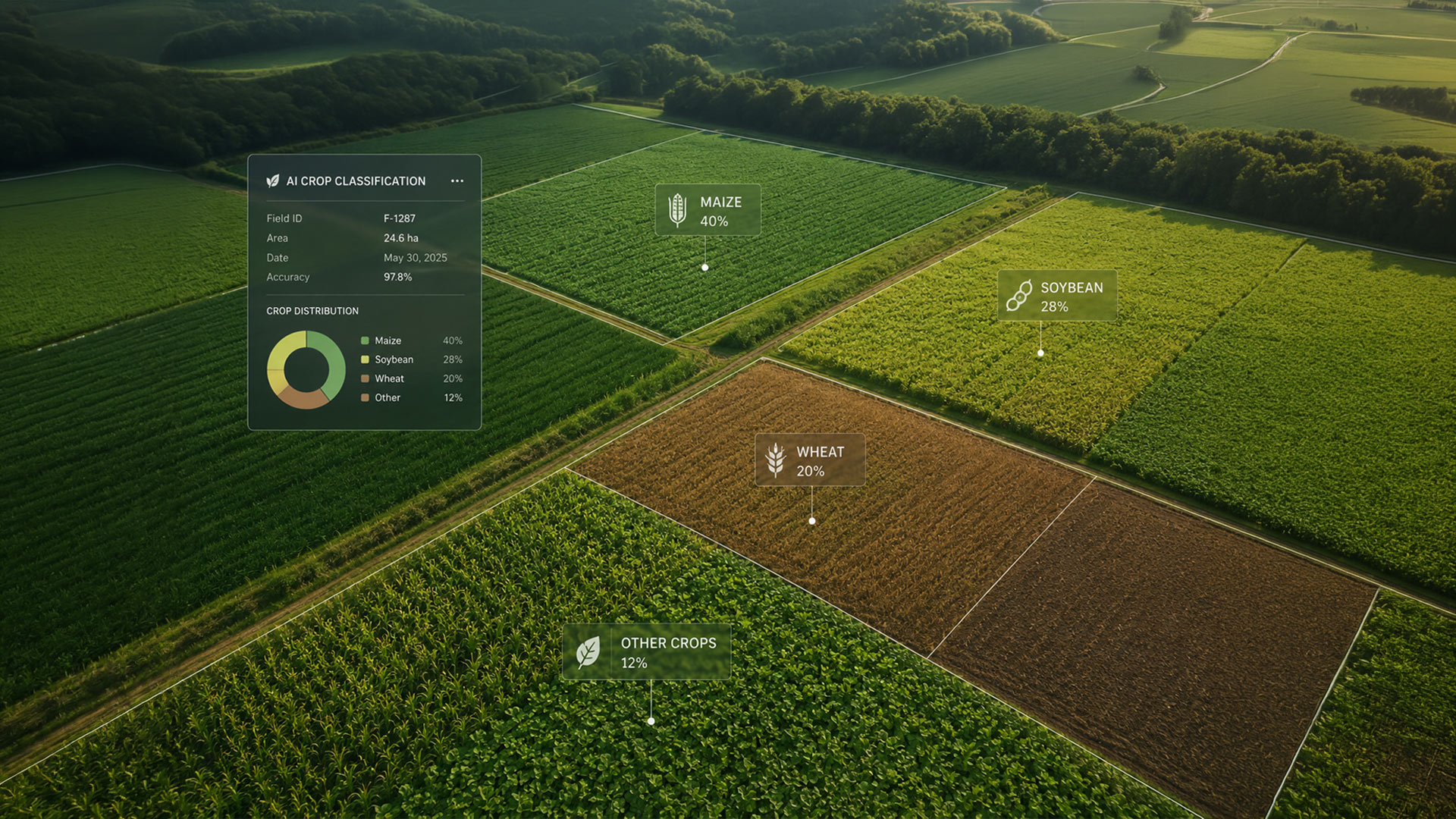
GeoAI-powered parcel-level crop validation automates eligibility checks using satellite imagery, GIS, and AI.
Built for government agencies, agribusinesses, cooperatives, insurers, and large-scale producers, AgriScope delivers satellite-verified crop monitoring, yield forecasting, risk intelligence & market insights to improve planning, reduce losses, strengthen supply chains, and support climate-resilient agriculture.
Manual crop verification slows procurement and increases the risk of ineligible claims.
GeoAI-powered parcel-level crop validation automates eligibility checks using satellite imagery, GIS, and AI.
Manual surveys make it difficult to monitor large agricultural landscapes across multiple crop cycles.
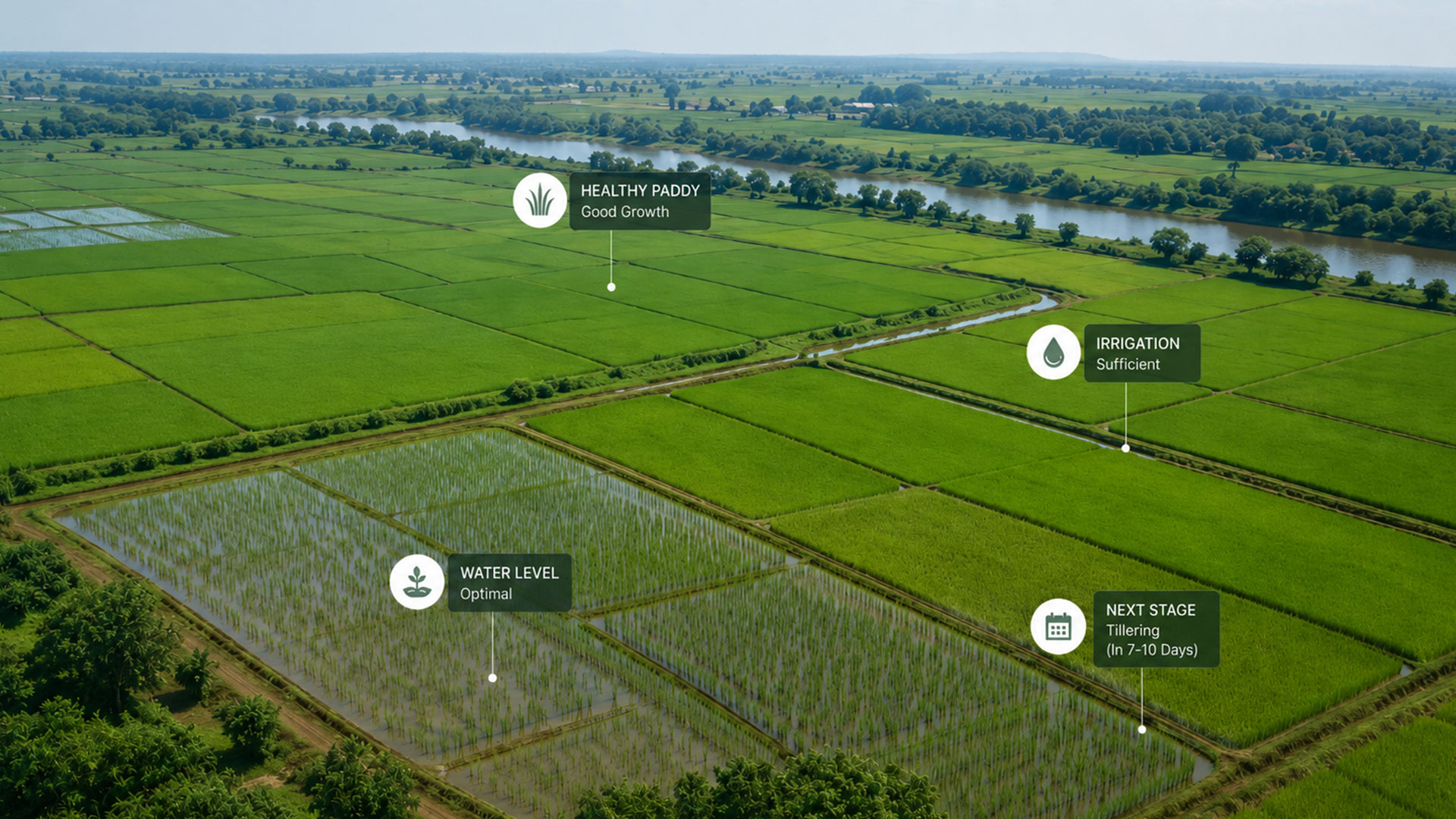
GeoAI-powered monitoring classifies crops, tracks growth & forecasts yields using satellite imagery.
Farmers and Water User Associations lack site-specific guidance on what to grow, where, and when.
GIS and satellite-based analysis recommends season-wise crop plans using land, soil, water, and market data.
Track crop health, growth patterns, field stress, and seasonal changes using satellite and field intelligence.
Estimate acreage, crop stage, and expected yield to support planning, procurement, and policy decisions.
Identify climate, weather, pest, disease, and crop damage risks across fields and regions.
Monitor water stress, soil moisture, carbon indicators, and sustainability performance.
Link crop production with price trends, demand patterns, storage, transport, and profitability outlook.
Evaluate which crops are better suited for future conditions based on climate, soil, risk, and market demand.
Connects field boundaries, satellite imagery, soil maps, weather feeds, crop records, GIS layers, and APIs into one agricultural data foundation.
Identifies crop types, estimates acreage, tracks crop stages, evaluates suitability, and forecasts yield using AI and satellite intelligence.
Monitors crop health, vegetation stress, water conditions, soil moisture, carbon indicators, and sustainability performance across fields and regions.
Detects drought, flood, heat, frost, pest, disease, and crop damage risks so teams can act before losses increase.
Tracks commodity trends, pricing, demand, profitability, storage, transport, and market outlook to support better crop and supply decisions.
Recommends suitable crop transitions using climate, soil, water, risk, profitability, and market demand intelligence.